



Author: Charles Lerner

  • There could have been a different path for Harmony Montgomery

    There could have been a different path for Harmony Montgomery

    Every child entrenched in the system deserves at least one zealous advocate to look after them. Harmony Montgomery didn’t have one.

    I entered the child welfare system in 1975 shortly after my 14-year-old mother, Dee, gave birth to me. She was poor and struggled with substance abuse and mental illness, like all the adults in her family. As a child, I bounced from foster home to foster home. I don’t recall much of my early childhood but there’s one memory that’s fixed in my mind. It’s me at 4, waking up in the morning, wet, frightened, and waiting for my foster mother to enter the room and beat me for wetting the bed.

    My entire childhood was tainted by abuse and neglect. But there were caring adults who stepped up for me during important points in my life. They gave me hope, and because of their belief in me, I became a college graduate, therapist, professor, child welfare leader, and adoptive parent to my nephew. None of these accomplishments, though, erase the memories of childhood abuse, which has had a lasting legacy.

    Read Full Article

  • You Cannot Get Kicked Out of Our Program

    You Cannot Get Kicked Out of Our Program

    Phoenix Santiago and Charles Lerner discuss the responsibilities we have to care for those who have experienced trauma under our watch. They ask the question “How dare we abdicate our responsibilities after the age of 18?” and discuss what it looks like to offer radical compassion.

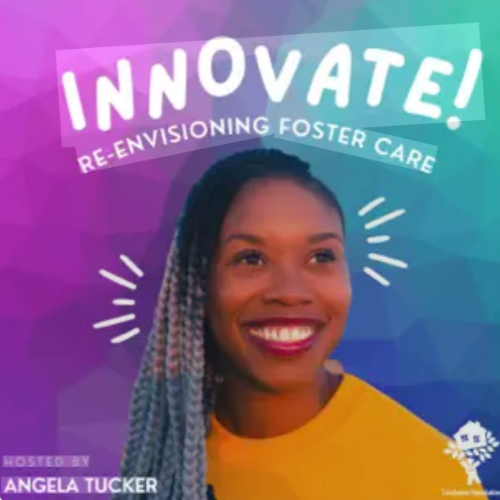
    Welcome back to INNOVATE! for Season Two! This season, host Angela Tucker highlights REFCA Champions who are inspiring a Re-Envisioning of Foster Care in America. These visionary leaders are using their wisdom, expertise and lived experiences in foster care to transform the foster care narrative from Alaska to New York, California to Missouri, the Pacific Northwest to New England.

    To learn more about INNOVATE!, the Re-Envisioning Foster Care in America (REFCA) Movement and the Treehouse Foundation, go to treehousefoundation.net. As always, be sure to like and subscribe to the podcast to be notified when new episodes are released.


    ABOUT THE HOST:

    INNOVATE! host, Angela Tucker, is a REFCA Champion and a nationally recognized mentor, entrepreneur, educator and consultant. Angela is a transracial adoptee who, having been adopted from foster care by a white family, grew up in a city that was demographically just 1% Black.

    She is the Founder of The Adopted Life, a child-welfare consulting business where she strives to center adoptee stories and bring clarity and truth to narratives about race, class and identity.

    Angela has produced The Adopted Life 3-part web series where she interviews transracially adopted youth. She is the host of The Adoptee Next Door podcast where she amplifies adult adoptee voices to showcase the wide spectrum of experiences. Her own adoption experience searching for and reuniting with her birth family is the subject of the documentary CLOSURE.

    Angela’s first book is scheduled for publication in spring 2023 (Beacon Press).


    Angela Tucker – Host & Producer
    Nicholas Ramsey – Editor & Producer
    Judy Cockerton – Executive Producer
    Distributed by smallhand.us

  • The Politics of Harmony Montgomery: How the System Failed in Two States

    The Politics of Harmony Montgomery: How the System Failed in Two States

    It’s always daunting for me to be in the media. What words can you offer in response to the loss of a child?

    Alison King and I discussed the political spin that would no doubt come out of the recent developments in Harmony’s case. I shared with her that the spin would eventually stop and we’d have the same system with the same problems with the same results. I shared that we need to get bold and create a system that dramatically reduces the number of children in foster care. Only then will we be able to meet our obligation for those children that need to be in care.

    Lastly, no child should be entangled in this system alone. Children need at least one person solely looking after them and ensuring that their needs are met, they have some sense of normalcy, and they are not slipping through the unavoidable cracks of the system. It’s why I believe in the CASA model so passionately. As is the case for every program, CASA needs to grow and evolve. However, I’ve never seen a program that has more of a positive impact on the lives of children in foster care. As a previous foster youth and the adoptive father of a child from foster care who had a CASA, I’m proud to be an ambassador of this organization.

    Read the news story: The Politics of Harmony Montgomery: How the System Failed in Two States